During the off season, when the sanctuary is quiet and the forest is doing its own work, we find time to write — sharing thoughts, observations, and the kind of insights that don't fit neatly into a brochure. Once the season begins, the blog goes quiet too. That's not neglect; it's just that we're out there, boots on, working hard to protect the forest we love writing about.
October 2026

Yes, Erasmus+ Funding Can Reach New Zealand. Here's What That Means for You.
For a long time, the working assumption among European students looking into a placement here was that Erasmus+ funding stopped at Europe's borders, and that anything as far away as New Zealand would have to be paid for entirely out of pocket. That assumption turns out to be wrong, and it is worth correcting clearly for anyone weighing up whether a placement at Pupu Rangi is financially realistic.
Erasmus+ traineeship grants are not restricted to placements inside Europe. Universities that hold Erasmus+ mobility funding are allowed to send a portion of it to destinations well outside the countries the scheme normally covers, and New Zealand qualifies. In practice, that means a conservation placement here can be eligible for the same kind of Erasmus+ support you would get for an internship somewhere in the EU, provided your own university chooses to make use of that option.
It is worth being upfront about one thing: every placement at Pupu Rangi is entirely hands-on and in person, out in the forest with the rest of the team. We do not offer a virtual, online, or blended placement option of any kind, so if that is what your funding pathway requires, this program will not be a fit.
How the Funding Actually Works
This falls under the traineeship strand of Erasmus+, which gives universities some flexibility over where they send students beyond the usual European destinations. A conservation placement in New Zealand sits well within that flexibility. Students who receive this kind of funding are typically supported in two ways: a contribution toward the cost of getting here, and a living allowance paid for the length of the placement.
Between the two, it is common for the travel support on its own to cover the full cost of your flights, with the living allowance then covering the greater part of what you would otherwise pay toward the program fee. Exactly how much is left for you to cover varies by placement length and by university, but for most students who receive this funding, it ends up being a small fraction of what they would have paid without it, and the single largest cost of the trip, the flight, is often covered outright.
The One Catch Worth Understanding
This is not a blanket guarantee that applies automatically to every European student. Funding for a destination like New Zealand is not something Erasmus+ hands out directly. It is a decision each university's international office makes about how to spend its own mobility budget, and universities vary a great deal in what they choose to fund. Some make this option widely known to their students, others restrict it to a short list of destinations that may or may not include anything outside Europe. There is no single answer that applies to every institution.
The only way to find out is to ask, directly and specifically, whether your Erasmus+ traineeship funding can be used for a placement outside Europe. A general question about whether your university "does Erasmus+" will not tell you what you actually need to know, since almost every European university does, in some form. The useful question is narrower than that, and it is worth putting in writing so you have a clear answer before you commit to anything.
Getting Erasmus+ funding organized is between you and your own university, much like a visa or an NZeTA, and it is not something we are able to arrange or confirm from our side. What we can do is answer any factual questions your international office needs to process an application: our dates, the structure of a placement, the program fee, and what a typical week here involves. If Erasmus+ funding is something you might be eligible for, the best first step is a short email to your Erasmus+ coordinator asking plainly whether traineeship funding can be used outside Europe. It costs you nothing to ask, and for a growing number of students, the answer turns out to be yes.
October 2026

Bring Your Research Question. We Will Help You Turn It Into Data.
A question we get fairly often, usually by email months before anyone arrives, is whether it is possible to do a master's thesis at Pupu Rangi rather than a standard volunteer placement or internship. The short answer is yes, and it is not hypothetical: we have hosted students working toward a master's degree who used their time here to collect real data for their own research, alongside the day-to-day monitoring work everyone else on site is doing.
If you are weighing up whether a small, off-grid sanctuary in Northland can actually support university-level research, here is what that has looked like in practice, along with some of the kinds of questions a thesis here could explore.
How a Research Placement Comes Together
The process usually starts the same way a lot of our planning does: with an email exchange well before you arrive. You do not need to turn up with a fully formed thesis proposal, but it helps enormously if you already have a rough area of interest and, ideally, a supervisor at your own institution who can sign off on whatever question you settle on. From there, we work with you to shape that interest into something achievable with the equipment, the season, and the monitoring routines already running on site, since your research has to sit alongside the sanctuary's own ongoing work rather than compete with it.
That usually means a project built on top of methods we already use every day: acoustic recorders, trail cameras, tracking tunnels, and the call-count surveys that make up the bulk of our monitoring. Rather than bringing in specialist equipment of your own, most students design a question that can be answered by collecting more data, more consistently, or in a more structured way than we would otherwise have time for. That tends to be exactly what a small conservation program benefits from, and it is what makes the arrangement a fair exchange: your thesis gets real field data, and our long-term monitoring gets an extra season of careful, purpose-designed record-keeping.
Timing matters more for a thesis placement than for a standard stay. Fieldwork like this needs enough consecutive weeks to produce a usable dataset, so most research placements run longer than a typical two-week volunteer stint, and they fall within the same season as the rest of our program: the months between the first Monday in November and the end of March, when the sanctuary is open and the monitoring routines a thesis project builds on are actually running. If your university's timeline does not line up neatly with that window, it is worth raising early. We would rather adjust a project's scope during planning than have you arrive to find the season does not fit your semester.
Some of the Questions a Thesis Here Could Explore
Every project is different, but a few possible topics give a sense of the range. One option is looking at how kiwi calling activity shifts with the phase of the moon and the weather on a given night. Another is mapping how introduced predators such as rats, possums, and stoats use different habitat zones across the property, using tracking tunnels and camera traps set out in a standardized grid. A third is tracking how bat activity varies between forest zones and through the hours of the night, picked up on our acoustic recorders. Another is testing how the likelihood of detecting a kiwi call changes with distance and habitat type, using structured playback surveys at measured points through the forest. And one is simply comparing trap type and placement, to see which combinations actually catch the most predators.
None of these need exotic equipment or a large team. What they need is patience, careful records, and someone willing to be out in the forest at the hours when the data actually happens, which tends to describe most of the students who choose to do this in the first place.
What Tends to Qualify, and What We Leave to Your Own Program
We monitor three species at Pupu Rangi: kiwi, long-tailed bats, and the giant kauri snail. Whether a project on any one of them formally counts as a master's thesis rather than an internship report depends on the rules of your own degree, not on anything we decide, so it is a conversation worth having with your supervisor before you arrive rather than after. Some programs draw that line along fairly specific taxonomic rules, for instance around which species count as vertebrates for the purposes of a given degree. In our experience, projects on kiwi or bats tend to map most easily onto formal thesis requirements, while snail research has more often suited an internship report, though that depends entirely on your own institution's rules rather than a fixed policy here.
If you are a master's student weighing up where to base a research project, get in touch and tell us roughly what you are interested in. We cannot promise every question is workable here, since some depend on equipment or a time of year we simply do not have, but a surprising number of good ecological questions can already be answered with tools running on site every night, whether or not a student happens to be here asking them. If yours is one of them, we would be glad to help you find out.
September 2026

Give Yourself a Few Days. Then Don’t Miss the 7:30am Bus.
A question that comes up almost as often as the visa one is what the first few days actually look like. Not the program itself, but the getting there: when to land, what the Monday morning involves, and how you find us once you step off a bus in a town you have never seen before. It is a fair thing to want mapped out in advance, so here is exactly how it works.
None of it is complicated once you know the shape of it. Arrive with a small buffer before your program starts, catch the right bus out of Auckland on the Monday morning, and know what you are looking for once you reach Dargaville. Here is each part in turn.
Give Yourself a Buffer
Our general advice is to arrive in Auckland a couple of days before your program begins, rather than flying in on the morning it starts. Long-haul flights from most of the world leave you jetlagged, and a rushed arrival is not how you want to begin your stay. From the airport, the SkyDrive shuttle runs into the city centre roughly every half hour for about NZD 20, taking around an hour. A couple of days in Auckland first gives you time to sleep properly, adjust to the time zone, and ease into being in New Zealand before the program itself begins.
One detail worth flagging: depending on the direction you are flying and how your connections line up, your arrival date in Auckland can land up to three days after the date you actually departed. It is a common source of confusion, so check the calendar date you land on rather than counting forward from when you left home. Whatever buffer you build in, plan to be in Auckland no later than the Sunday before your program starts. That leaves a full day in hand before the Monday morning bus, so a delayed flight or a rough night's sleep does not turn into a missed connection.
Monday Morning: The Bus You Cannot Miss
The email you receive about a month before your start date confirms your pick-up date, which is always a Monday. Getting from Auckland to Pupu Rangi that morning means two buses: Auckland to Whangarei, then Whangarei to Dargaville. The first is an Intercity coach leaving the Sky City Coach Terminal at 102 Hobson Street at 7:30am, arriving into Whangarei at 10:19am. Fares run somewhere between NZD 25 and NZD 60 depending on how far ahead you book, and booking early is worth doing simply to lock in a seat on the one departure that matters.
That 7:30am departure is the detail worth committing to memory. Miss it and you miss the connecting bus to Dargaville, and if that happens, you may be looking at waiting until the following Monday to join the program. It sounds like a small thing when you are looking at a timetable weeks out, but on the morning itself, with a taxi running late or a hostel checkout taking longer than planned, it is the one part of the whole trip worth building real margin around. Get to the terminal with time to spare. You will get off the bus in Whangarei at a stop called The Hub, now officially the Whangārei Art Museum, at 91 Dent Street.
Whangarei to the Meeting Point
What happens next depends on which service is running that particular week, and we will confirm which one applies to you by email about a week before you arrive. Most weeks it is a local bus, Te Wai Ora Coachlines, leaving at 3:15pm. The one detail that trips people up is where it leaves from: not The Hub, but a stop on Bank Street by the Biggie Bagel Cafe, about a fifteen minute walk away. With several hours to fill between buses, it is a reasonable stretch to use, whether that means walking the marina behind The Hub, visiting the Hundertwasser Art Centre, or finding a café and taking your time over lunch. The fare is NZD 20, paid in cash directly to the driver, and it cannot be booked in advance. That bus ends its run at the last stop in Dargaville, on the corner of Kapia Street and Victoria Street, where we will be waiting for you in a silver Toyota minivan with a Pupu Rangi Nature Sanctuary sign in the windscreen.
On weeks when that local service is not running, we send a shuttle instead, meeting people right at The Hub at 10:30am, timed to your bus's arrival, for the same NZD 20 fare. There is no separate hand-off in Dargaville on this route: the same vehicle that collects you in Whangarei carries on all the way to the sanctuary, sometimes with a short stop in Dargaville to pick up supplies along the way. It is a longer ride than it sounds, so pack a lunch if you know you are on this route.
If you are coming from Paihia or the Bay of Islands instead of Auckland, the same connection applies in reverse: take the 7:45am Intercity bus from Paihia on your start date to reach Whangarei in time. And if anything changes on the day, from a delayed flight to a bus that never shows, call or message us directly on +64 2040190985. We would much rather hear from you at 8am on a Monday than have you standing on a street corner unsure what to do next.
Driving yourself rather than relying on buses is also an option. Get in touch beforehand and we will arrange a meeting time and place by email, since where that is depends on which direction you are travelling from: Whangarei, Dargaville, or Trounson Kauri Park, close to the sanctuary itself. It is a bit more involved to arrange than the standard bus route, which is why we work it out individually rather than publishing a fixed time and place, but the sanctuary offers free, safe parking for the length of your stay.
August 2026

You Don’t Need a Special Visa. You Need Enthusiasm and a Desire to Protect Nature.
Somewhere in nearly every email exchange, usually right after questions about dates and cost, comes some version of: what visa do I actually need? There is often an assumption sitting underneath the question, that conservation volunteering must involve its own category of paperwork, something between a tourist visa and a work permit. It doesn’t. For almost everyone who joins us, the answer is simpler than expected, and it is worth setting out properly so nobody is scrambling to sort it out the week before their flight.
New Zealand’s rule for visitors is that unpaid participation is fine, but anything that starts to look like paid employment needs a work visa. Some of the confusion online comes from articles about volunteering in exchange for free board and accommodation, where the lines around “gain or reward” can get genuinely blurry. That question doesn’t really apply here, since you are a paying participant rather than someone working in exchange for their keep. There is no wage, no exchange of labour for a bed, nothing that resembles employment, just a fee-paying visitor taking part in a structured program. The ordinary visitor entry that gets someone here for a holiday is the same entry that covers a stay with us. For most nationalities, arranging that now happens online, before you fly, through the NZeTA.
What an NZeTA Actually Is
NZeTA stands for New Zealand Electronic Travel Authority. Since October 2019, anyone travelling from a visa waiver country has needed to request one before boarding their flight, whether they are coming for two weeks or five months. It isn’t a visa in the traditional sense, there’s no form asking about your finances or your itinerary, more a short registration that confirms who you are before you arrive.
You apply through the official Immigration New Zealand app or website. The app is slightly cheaper, NZD 17 versus NZD 23 through the website, and alongside it you will pay the International Visitor Conservation and Tourism Levy, currently NZD 100, which goes toward the conservation and tourism infrastructure that places like this rely on. Altogether you are looking at somewhere around NZD 120, paid once. Most applications are approved quickly, but Immigration New Zealand advises allowing a little time in case yours needs extra checking, so we would suggest doing it a couple of weeks out rather than the night before. Once approved, the NZeTA is valid for two years, or until your passport expires, whichever comes first, and it covers multiple entries, so it really is a once-per-passport task rather than something to repeat before every trip.
A Couple of Exceptions Worth Knowing
The visa waiver system is mostly uniform across the countries it covers, but there are two variations worth flagging before you book. The first is length of stay. Most visa waiver passports, NZeTA included, get three months. That covers every EU passport, along with most other visa waiver countries. British passport holders are the exception, getting six months, worth knowing if you’re thinking about combining your stay with independent travel either side of it.
The second is Australia, which sits outside the waiver system altogether. Australian citizens do not need an NZeTA at all; a passport gets you through on its own, a holdover from how closely the two countries’ immigration systems are tied together. Australian permanent residents who are not citizens still need to request an NZeTA, but they are exempt from the $100 levy, so their cost is limited to the small processing fee.
If Your Stay Runs Longer Than Three Months
Because our volunteer stays can run anywhere from two weeks up to five months, and the internship runs ten to twenty weeks, it is only fair to be upfront about where the waiver runs out. Most visa waiver entries, NZeTA included, only cover three months at a time (six if you are British). If your planned stay, plus any travel either side of it, adds up to more than that, the waiver alone will not cover you, and the NZeTA cannot be extended once you are here.
The fix is straightforward: apply for an actual visitor visa in advance, before you fly, rather than relying on the waiver. It costs more and takes longer to process than an NZeTA, so it needs to go in earlier, but it is the more reliable route once you already know your stay will run long. It is also possible to apply to extend a visitor visa from inside New Zealand, generally up to nine months total within any eighteen-month period, but approval is not guaranteed, and we would much rather you arrive with your paperwork already settled than find yourself applying for extensions partway through a season.
Getting Your Visa Is Your Responsibility
One more thing worth being upfront about: sorting out your own NZeTA or visa is entirely your responsibility, not something we manage on your behalf. We’re also not able to provide invitation letters, sponsorship letters, or similar supporting documents for a visa application. Almost everyone who joins us comes in as an ordinary visitor rather than through any kind of work or sponsorship arrangement, so there genuinely isn’t a document for us to issue, and Immigration New Zealand doesn’t ask for one either.
If your passport isn’t on the visa waiver list at all, the process works a little differently: there is no NZeTA option for you, and it is your responsibility to contact your nearest New Zealand embassy or consulate directly to arrange a visitor visa. That process can take considerably longer than an NZeTA, so it’s worth starting well before you book with us rather than after.
None of this is complicated once it is laid out, but immigration rules do shift over time, and the details for your specific passport are worth confirming directly rather than taking anyone’s word for it, ours included. The official NZeTA application site is the authoritative source, and if anything about your situation looks different from what is described here, it is always worth writing to us before you book. We would rather answer the question twice than have someone find out something was wrong at the airport.
July 2026
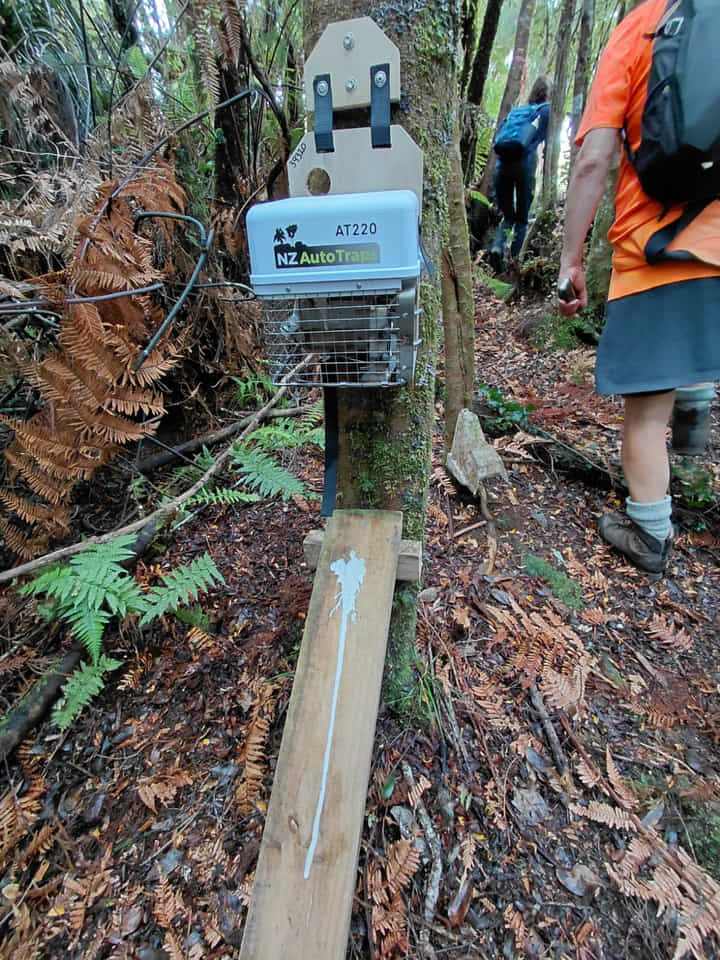
Predator Control at Pupu Rangi: What the Conservation Work Involves
Conservation in New Zealand has a gentle public image — planting native trees, listening for birds at dawn, the occasional photo of a kiwi chick. A lot of that is real. But much of the work that makes it possible is quieter and less photogenic: protecting native species here means controlling the introduced predators that prey on them. That involves trapping, and it involves killing those predators. We would rather explain that openly, and explain why, than have anyone arrive without a clear picture of it.
Why It's Necessary
New Zealand spent 80 million years with no land mammals. Its birds, insects, snails, and bats evolved with nothing to run from — many of them flightless, ground-nesting, and slow, with no defences against an animal that hunts by scent and speed. When people arrived and brought stoats, rats, possums, ferrets, and cats with them, native wildlife had no way to cope, and the decline that followed is still going on today. Stoats are the main reason most wild kiwi chicks never reach adulthood. Rats take eggs and chicks; possums strip the forest the birds depend on. Left unmanaged, these introduced animals don't settle into a natural balance with native species — the native species simply disappear.
There isn't a version of protecting this forest that leaves the predators in it. Trapping, baiting, and fencing are the methods that work, and they are the same ones used across the country, including by the New Zealand Department of Conservation. If you'd like the wider picture, DOC's introduction to conservation is a good starting point. The position is a simple one: protecting these species means removing the animals that eat them.
What the Work Involves
In practice, predator control is steady and methodical rather than dramatic. It means walking trap lines through the bush, checking and resetting traps, refilling bait stations, and keeping careful records so the effort can be measured over years rather than days. It is unglamorous, repetitive, and quietly satisfying when the numbers move in the right direction. It also means coming into contact with the reality of it: this is hands-on work, and the traps do what they are designed to do. We don't dwell on that, but we don't hide it either.
For volunteers and interns, this is a regular, central part of the work. One-week Immersion participants don't take part in the trapping itself, though they live and work alongside it and come to understand why it's done.
Something to Consider Before You Apply
We explain all this for one reason: so the people who join are choosing it knowingly. For most people who care about nature, predator control makes sense quite quickly — once you've seen a forest start to recover, the logic becomes concrete. But it isn't for everyone, and that's completely understandable. Some people, including many vegans and others who care deeply about animals, would simply rather not take part in deliberately killing them, introduced or not. If that's you, it is far better to know it before committing to a trip across the world, because this work is a real and regular part of what we do.
There's no judgement either way. Conservation in a place like this asks you to hold two things together: that every animal matters, and that protecting vulnerable native species sometimes depends on removing the ones that prey on them. People who can accept that tend to find the work among the most meaningful they have done. People who can't are better served by one of the many gentler ways to spend time in nature, and there is no harm at all in deciding this isn't your path.
If the reasoning makes sense to you, take a look at our volunteer program, or get in touch with any questions — we're always glad to talk it through before you decide.
June 2026

A Lost Kiwi Found, Four Seasons in a Row, and Nights in a Hammock: Our 2025–2026 Review
The 2025–2026 season is behind us now, and it left the program in good shape — better than it found it, in a few measurable ways. Two things in particular are worth leading with: a kiwi nobody had been able to account for was found, and two nights were spent out in the forest in hammocks listening for calls. Both of those deserve more than a passing mention.
Field Notes from the Season
The trap lines and monitoring work ran well throughout the year. Numbers stayed where we need them to stay, the bait stations were kept up, and the records grew. There is no dramatic shorthand for a season of consistent predator control — it is a long accumulation of small actions done correctly, and the value only becomes visible over years. This season added to that accumulation.
Finding the lost kiwi was the kind of moment that resets your sense of what the forest contains. The bird had dropped off the radar, unaccounted for, and then turned up again. It is easy to assume the data tells you everything. It does not. The forest keeps its own ledger, and occasionally it shows you a page you did not know existed.
The overnight hammock activities were something different again — two nights out in the dark, in the trees, waiting for calls. There is a version of kiwi monitoring that happens from a distance, through equipment. This was not that. This was being in it, physically, in the middle of the night, which earns its place on any list of things worth doing at least once.
The People, the Camp, and the Horses

This season's intern arrived with the right attitude and kept it all the way through. The role was taken seriously — the tasks, the responsibility, the standard expected — and by the end of the season the work showed. The program is better for having had them.
Among the volunteers, our regular joined us for the fourth season in a row. The fourth time! If you want a measure of what this place means to the people who come through it, that is probably the clearest one available. He is like family member now, fingers crossed for the fifth season!
Camp-side, the season was productive beyond the field work. A new path was built, and a number of small improvements were made to the site that will make next season run more smoothly. The kind of work that does not appear in the conservation data but matters every day regardless.
And the horses. This season brought with it an unexpected education in horses — more thorough than anyone had planned for. The full story may require its own post.
To everyone who was part of the 2025–2026 season — thank you for showing up, for doing the work, and for leaving things better than you found them. Same time next year.
May 2026

Volunteer or Intern at Pupu Rangi? Same Forest, Very Different Expectations
It is one of the most common questions we get: what actually is the difference between the volunteer program and the internship at Pupu Rangi Nature Sanctuary? The short answer is that the activities are the same — you will be doing the same work in the same forests, checking the same trap lines, running the same monitoring routes. The longer answer is that the expectations around that work are quite different, and understanding the difference matters before you choose.
What Both programs Have in Common
Both volunteers and interns work across the same forests. The core activities — predator trapping, monitoring lines, kiwi telemetry, trail camera installation, biodiversity work — are available to everyone, and both programs require a genuine commitment to the work. Volunteers can stay anywhere from one week up to five months; the internship runs for a minimum of ten weeks and can be longer. So in terms of what you are doing day to day, and even how long you can stay, the two programs have more in common than most people expect.
What both programs also share is a basic level of accountability that is non-negotiable. This is a serious conservation project, not a holiday that happens to involve some outdoor activity. During working hours, the work gets done. There is no room for coasting. Relaxation comes at the end of the day and on days off — and those are genuinely good — but the working day is the working day, and everyone is expected to show up for it.
Where the Intern Role Is Different
The internship is designed to function more like a real job than a program. That distinction matters in practice.
An intern at Pupu Rangi is expected to retain what they learn — not just pick it up and move on, but build a body of knowledge they can draw on and pass on to others. Initiative is expected rather than occasionally appreciated: noticing what needs doing and doing it without being directed. Curiosity is expected: asking why things are done the way they are, following up on what is unclear, and developing a deep enough understanding of the program to be able to explain it to someone who has never seen it before.
If something takes longer than anticipated, interns stay with it. If a newer volunteer needs guidance, the intern provides it. If a mistake is made, it is noticed, corrected, and not made again. The margin for error is tighter, the responsibility is broader, and the role asks more of the person holding it.
None of this is said to put people off interning — quite the opposite. The ten-week internship produces a depth of practical knowledge and personal development that a shorter volunteer stay simply cannot replicate. But it is worth being clear about what it involves so that the people who choose it are choosing it with their eyes open. If you are ready to treat it like a job, it will give back accordingly.
April 2026

Wet Boots, Dripping Ferns, and the Quietest Place You Will Ever Find Yourself
Most people who come to Pupu Rangi have seen photos of New Zealand rainforest before they arrive. What the photos cannot prepare you for is what it actually feels like to be inside one. The Northland podocarp forest is a full-body experience, and it tends to do something unexpected to the people who spend time in it. Here is an honest attempt to describe it.
What the Forest Actually Feels Like
The first thing you notice is the moisture. The Northland forest is genuinely wet — not unpleasantly so, but constantly, quietly, pervasively wet. Water drips from the tips of crown ferns long after the rain has stopped. Moss covers the fallen logs so completely that the wood underneath has almost ceased to exist. The trunks of rimu and kahikatea rise out of a dense understorey of ponga tree ferns, their silver undersides catching what light filters down through the canopy, and the ground beneath your feet gives slightly with each step — layers of leaf litter and root systems and living soil that have been accumulating for longer than any of us can meaningfully picture.
The density of the undergrowth means your field of vision closes in within a few metres of the track in any direction. Nikau palms push up through gaps in the ferns. Matai and tōtara form the upper canopy, their bark dark and heavily textured with lichen. Fantails appear from nowhere and follow you along the path, curious and completely unafraid. The smell is worth mentioning on its own: damp earth, decomposing leaves, something green and alive and faintly sweet that you will not find a word for until you have smelled it a few times. It is the smell of a system that is working.
And then there is the quiet. It is not total silence — the forest is full of sound, birdsong and the creak of branches and the steady drip of water finding its way down through the layers. But it is a particular kind of quiet, the kind that city life makes almost impossible to find. The mental noise that follows you everywhere tends to settle, quite quickly, once you are deep enough in.
What Navigating It Does to You
Moving through dense forest is a skill, and it builds on itself in ways that are easy to underestimate. At first the tracks feel narrow, the undergrowth feels close, and the whole thing can feel slightly disorienting. That is normal, and it passes.
What replaces it is something more useful: a growing spatial awareness, an ability to read the ground ahead, a habit of paying attention that becomes automatic over time. You learn which roots are slippery and which give good grip. You learn to move through narrow gaps without losing your footing. You learn, gradually, that the forest is navigable — that you are capable of moving through it with confidence and care.
For a lot of people who come through Pupu Rangi, this is one of the quieter but more lasting things they take away. Not a dramatic moment, just the slow accumulation of a competence they did not have before, built up track by track over days and weeks in the forest. You do not need to be an experienced hiker to start. You just need to be willing to put on your boots, head into the trees, and let the forest do what it tends to do.
October 2025

One Week or Four? A Guide to Choosing How Long to Stay
October is here and the new season is almost upon us — which means a lot of people are starting to make plans. With that in mind, we thought it was a good time to tackle a question we get asked more than almost any other.
One of the most common questions we get before someone books is also one of the hardest to answer in a single line: how long should I come for? The honest answer is that it depends on what you are hoping to get out of the experience. Here is a straightforward breakdown to help you decide.
If You Only Have a Week (or Two)
A week is enough time to get a genuine feel for what conservation work involves day to day. You will cover the basics — learning about the conservation issues that we face in New Zealand, learning the trap lines, understanding how predator control is organized, getting your bearings in the forest. The work is real and the experience is real — and within two days, you will already be out in the forest making a genuine contribution to the program.
What a week does not give you is time to settle in properly. The first few days of any new environment involve a lot of adjustment: learning where things are, understanding how the camp runs, getting physically comfortable with moving through dense bush. By the time that starts to feel natural, the week is nearly over. You will leave with a solid introduction and a clear sense of what this kind of work involves.
Two weeks sits in a more useful middle ground. You get past the adjustment period and into the work itself, enough time to start feeling capable rather than just oriented. It is a good length for people who cannot commit to a full month but want more than a taster.
Why Four Weeks Is the Sweet Spot — and When to Go Further
The conservation activities here run on a roughly four-week cycle. Staying for a month means you will encounter almost every task at least once — from different trap lines and monitoring lines to telemetry work and trail camera installation. You get the full picture rather than a slice of it.
There is also a practical reality about skill development in the field. Based on what we have seen season after season, it takes around three weeks before most people feel genuinely independent in the forest — able to navigate a track alone, confident with the equipment, comfortable making decisions without prompting. That shift from learner to capable participant is one of the most satisfying parts of the program, and it takes time to arrive. A four-week stay means you actually get to experience it rather than just glimpse it on the way out.
For those who are seriously considering conservation as a direction — whether that means a degree, a career in the field, or simply needing a meaningful body of practical experience — the ten-week internship is a different proposition entirely. Over ten weeks you develop genuine competency across the full range of activities, contribute to long-term datasets, and build the kind of hands-on knowledge that looks very different on a CV than a short volunteering stint. It is designed for people who want to find out, with some certainty, whether this is the path they want to take. Beyond the technical conservation skills, the internship also develops the kind of soft skills that matter in any career — leadership, organization, coordination, and communication — all built through real responsibilities in a working field environment. We will be writing a separate blog about the internship in more detail.
Whatever length you are considering, the most important thing is to arrive with realistic expectations and genuine curiosity. The forest rewards both.
September 2025

The Northland Rainforest in Spring: Returning Cuckoos, Unfurling Ferns, and a Forest Coming Back to Life
September in a Northland podocarp forest is a shift you can feel before you can explain it. The days are stretching, the light is coming in at a different angle, and something in the forest has changed tempo. Spring in this part of New Zealand is not a slow awakening — it is a fairly abrupt switching on, and once it starts, everything happens at once.
What the Birds Are Doing
The arrival of the shining cuckoo from the Solomon Islands is one of the clearest signals that spring has arrived. Its call — a rising, insistent whistle that carries further than you expect through dense forest — starts appearing in September and marks the season as reliably as a calendar. It is a migratory bird that has made this crossing every year for longer than anyone has been around to record it, and hearing it for the first time in a season still stops people in their tracks.
Tūī are loud and aggressive in spring, fighting hard over nectar sources and filling the canopy with a mix of song and mechanical clicking that sounds unlike any other bird. Kererū are beginning to pair up and move through the forest with slightly more purpose than their usual unhurried drift. Fantails are building nests and starting early broods, and the grey warbler — riroriro — is singing almost constantly, one of the most persistent and welcome sounds of a Northland spring morning.
Brown kiwi are actively incubating eggs through this period, the males taking on most of the sitting in their underground burrows while the forest carries on above them. Ruru call at night from the same perches they have used all winter, but their calls are more frequent now, and if you are outside after dark in September you are rarely without the sound of them.
How the Forest Itself Is Changing
The most visible sign of spring in the podocarp forest is the koru — new fern fronds unfurling from the crown of the ponga tree ferns in tight, perfect spirals. They push up through the older growth in a fresh lime green that stands out sharply against the deeper tones of the established canopy, and watching one uncurl over the course of a week is the kind of thing that sounds small until you actually see it.
The rimu, kahikatea, and tōtara are putting out new growth at their tips, adding bright colour to the upper canopy. Supplejack is shooting, threading new tendrils through whatever gaps it can find. The understorey is thickening quickly, and the forest floor — already dense with crown ferns and moss — is accumulating another layer of life on top of itself. The smell of the forest changes in spring too: less the deep, composting richness of winter and more something fresher and sharper, the smell of things actively growing rather than quietly breaking down.
Spring in a Northland rainforest is not a gentle or tentative thing. It is confident and fast and full of sound. You do not need to know the names of everything to feel that the forest around you is doing something — and that being inside it at this time of year is, by any measure, a good place to be.
August 2025

Before You Romanticize Off-Grid Living, Read This
Off-grid living has an image problem — and the image is too good. From your couch at home, it sounds like crackling fires, starlit skies, and a deep reconnection with the natural world. All of that is real. But so is the gap between imagining it and actually doing it. Before you book, it is worth knowing what you are actually signing up for.
The Part the Brochures Leave Out
The fire is romantic. Chopping the wood for it is not — or rather, it is, but only after you have done it enough times that your body has adjusted and you have stopped noticing the blisters. At Pupu Rangi, resources are finite and they do not replenish themselves on demand. You cannot have a shower whenever you feel like it. The water, the firewood, the electricity — all of it comes with limits, and those limits are set by nature, not by a utility company. You will think about where things come from in a way you probably never have before, because you will have to.
The long drop toilet deserves its own paragraph. It is not a city bathroom. It smells like what it is. Getting there at night means putting on shoes, climbing over a fence, and walking in the dark — and yes, there will be spiders in the corners. If the idea of that fills you with genuine dread, that is important information worth sitting with before you book — though it is also worth asking yourself how much of your day you actually spend on the toilet.
The layout of the property is also worth understanding before you arrive. Your bedroom is roughly 200 metres from the living room. The kitchen and the eating area are separate, and there is no covered path between them. You will get rained on. Northland rain is not a light inconvenience — it arrives with intent and without much warning. You will make peace with being wet, or you will have a difficult time.
None of this is said to discourage you. It is said because people who arrive knowing what to expect tend to settle in quickly and get a great deal out of the experience. People who arrive expecting glamping have a harder first week.
What You Get in Return
Here is the other side of it, and it is genuinely good.
You might bump into a kiwi on your way to the toilet in the dark. That is not a figure of speech — it happens, and there is nothing quite like it. The owls call from the trees close to the accommodation at night, close enough that you do not need to go looking for them. You are living at the edge of a working rainforest, and the forest makes itself known in ways that no nature documentary can replicate.
The people you share the experience with matter more than you might expect. When the living conditions are stripped back and everyone is navigating the same inconveniences, something tends to happen to a group. Conversations go deeper. Small things become funny. You might find yourself at the end of the evening brushing your teeth outside with the rest of the group, looking up at more stars than you knew were there, next to people you met two weeks ago and will probably stay in touch with for years.
Off-grid living is not for everyone, and it does not need to be. But if the honest version of it — the long drop and the rain and the wood-chopping alongside the kiwi and the owls and the stars — sounds like something you could genuinely embrace, you will probably love it here.
July 2025

New Kiwi Pair, Taylor Swift in the Ponga Room, and a Season to Remember: Our 2024–2025 Review
Every season at Pupu Rangi is shaped by the people who turn up for it. This one had more than its share of characters — and the forest is better for every one of them. Here is how the 2024–2025 season went.
The Conservation Work
The trapping program had a strong year across all four forests. Predator pressure stayed low throughout the season, which is exactly the kind of result that does not make for dramatic headlines but matters enormously for the species that depend on it. The bait stations were checked, restocked, and checked again. The data sheets filled up. The work got done.
The standout moment came when we confirmed a kiwi pair in an area of the forest where none had been recorded before. That kind of discovery does not happen by accident — it is the result of years of sustained predator control creating the conditions for kiwi to expand their range. It is the whole point of the program, delivered quietly and without ceremony, just the way these things tend to happen in a working forest.
The People Who Made It Happen

None of this happens without the people who show up, and this season's crew was something else.
We had one intern who threw herself into the work from day one and left the forest measurably better than she found it. The volunteers who came through were, across the board, exactly the kind of people this program is designed for — curious, capable, hard working, and genuinely invested in the outcomes.
Among them, a number of them quickly earned the Tiger title. There were regular Tigers, but also Little Tiger, Big Tiger, and — memorably — the one who was never a Tiger. They will know who they are.
Then there were the Swifties. A group of volunteers found a guitar, a shared enthusiasm for Taylor Swift, and absolutely no hesitation about deploying both in the ponga room on a quiet evening or out at Sunset Point. Karaoke night was, by any measure, a success. The forest endured it gracefully.
A season is not just the work — it is also the people you share the long evenings with, the ones who make the difficult days easier and the good days genuinely memorable. This group did both.
To everyone who was part of the 2024–2025 season: thank you. The kiwi are doing well. So is the forest. We will see you next time.
June 2025

If You're Serious About Conservation Volunteering, Read This Before You Book
There are hundreds of conservation volunteer projects around the world, and the number keeps growing. That is genuinely good news — it means more people care, more funding is available, and the idea of doing something meaningful with your time abroad has gone mainstream. But it also means the space is crowded, and not everything that calls itself conservation actually is. Before you hand over your money and your time, it is worth knowing the difference.
The Question Worth Asking Before You Book
The conservation volunteering industry has a problem that most of its marketing won't mention: a lot of programs are built around the volunteer experience, not the ecosystem. They need a steady flow of paying participants to stay financially viable, which means they need activities that are accessible, photogenic, and satisfying regardless of skill level. None of that is necessarily wrong, but it can drift a long way from actual conservation outcomes.
Signs worth looking for: Does the project publish any data? Is there a long-term scientific framework behind the work, or is each volunteer group essentially starting from scratch? Are the activities chosen because they genuinely need doing, or because they photograph well? Is there a permanent staff presence that provides continuity between rotations, or does institutional knowledge walk out the door every two weeks?
These are not hostile questions. Most project managers who care about the work will answer them readily and with some enthusiasm. The ones who can't — or who respond with testimonials and Instagram links — are telling you something important.
What We Do Differently, and Why It's Not for Everyone
At Pupu Rangi we run a small operation by design. We work with a limited number of volunteers at any one time, across four forests in Northland. The work — predator trapping, biodiversity monitoring, kiwi telemetry, native planting — is tied to an ongoing dataset that goes back years. What you do in your first week builds on what someone else did last season, and what someone else will continue next year. That continuity is the whole point.
It means the learning curve is real. You will spend time getting comfortable with equipment, understanding why a particular trap line is placed the way it is, learning to read the forest in ways that are not obvious at first. There is no shortcut to that, and we do not pretend otherwise.
It also means the reward is different. You won't come away with a hundred wildlife photos or a certificate of completion. You'll come away with a specific, grounded understanding of how conservation actually works — the patience it requires, the attention to detail, the satisfaction of a dataset that means something.
We are honest about who this suits: people who are genuinely curious, who can handle being outdoors in all weather, who are comfortable with tasks that feel unglamorous, and who care more about outcomes than optics. If that sounds like you, we'd love to hear from you. Have a look at our volunteer program and feel free to get in touch with any questions.
Conservation needs people who are in it for the right reasons. So does the forest.
May 2025

You'll Brush Your Teeth Under the Stars. And You Won't Want to Go Inside.
There are parts of a stay at Pupu Rangi that people expect to be good — the kiwi calls, the forest, the sense of doing something that actually matters. Then there are the things nobody really warns you about, and the night sky is one of them. The nearest electric light is kilometers away. There is no glow on the horizon, no streetlights bleeding upward, nothing softening the dark. On a clear night, the sky does something most people have simply never seen it do — and that tends to stop people mid-sentence, mid-thought, mid-toothbrush.
What You'll Actually See Up There
If you have grown up in a city or a town, you have probably seen a version of the night sky. A scattering of the brightest stars, maybe the moon, the occasional plane. What you see at Pupu Rangi is something else entirely — a sky so dense with stars that the familiar shapes take a moment to pick out from everything around them.
The Southern Cross is the one to find first. Four stars arranged in a compact cross tilted slightly to one side, with two bright pointer stars — Alpha and Beta Centauri — sitting close by and pointing back to it. It is one of the most reliable navigation tools in the southern hemisphere and, once you know what you are looking for, one of the most satisfying things to find. Next to it, the Milky Way arcs right across the sky on the clearest nights — not a vague pale smear but a proper band of light, textured and layered, visibly different in density from one part to another.
Orion is up there too, though oriented differently than northern hemisphere eyes expect — in the southern sky Orion appears to stand upside down, his belt of three stars still one of the easiest things to lock onto. On a still night from Sunset Point, lying back on one of the logs and letting your eyes adjust, you can count shooting stars without trying very hard. Satellites cross the sky in slow, steady lines — no blinking, no sound, just a point of light moving purposefully from one horizon toward the other. Once you start noticing them, you see them constantly.
The Stars That Are Already at Ground Level

A few metres from the accommodation, there are glow worms. They live in the bank beside the path, tucked into the damp earth and moss, and at night they produce a soft, cold blue-green light — dozens of tiny points in the dark that look, from a little distance, remarkably like a section of the sky that has come down to sit at eye level. It is one of those details that sounds a bit much when you describe it and then turns out to be completely true when you see it.
The combination of all of it — the sky overhead, the glow worms in the bank, the absence of any artificial light, the sound of the forest at night — is the kind of thing that recalibrates something. People who have been here describe lying on their backs at Sunset Point counting shooting stars, or standing still on the path in the dark because stopping felt like the right thing to do. It is not something you can replicate elsewhere easily, and it does not cost anything extra. It is just what happens when the lights are off and the sky is clear. Bring a warm layer and stay out a little longer than you planned to.
April 2025

We Don't Do 80%. What It Really Means to Work on a Serious Conservation program.
People come across phrases like "this is not a holiday" and "we take the work seriously" on this website and tend to nod along without necessarily thinking about what that means in practice. It is worth being specific. Conservation fieldwork across 11 kilometers of dense Northland bush, spread across a full team working independently, has no margin for approximate effort. What follows is an honest description of what we actually expect — and why that standard is good for the project, and good for you.
What Following Instructions Actually Means in the Field
Before every task, we provide training and clear instructions. That part is straightforward. What is less straightforward — and where many people underestimate the challenge — is what happens once you are in the forest.
You cannot pull a notebook out of your pocket every five minutes when it is raining and the track is steep. You cannot scroll back through your messages to check what the protocol said. What carries you through is not a flawless memory — it is paying real attention during the briefing, asking when something is unclear, and taking it seriously the first time. The instruction needs to go in, and it needs to stay in, and that is entirely learnable if you bring the attention.
Following instructions also means understanding them, not just reciting them. If you are checking a trap and the result does not look right, you need to know what right looks like in order to notice. If you are collecting data and the numbers seem off, you need to have enough context to flag it rather than just writing it down and moving on. Cutting corners — skipping a step, approximating a measurement, deciding that close enough is fine — produces data that cannot be used, or worse, data that is used incorrectly. Neither outcome is acceptable when the subject is an endangered species.
Your Work Is Part of Something That Cannot Always Be Repeated
On a full field day, you might have six team members working independently across the entire property. Each person is responsible for their section. Each section feeds into a result that only has meaning if every part of it was done correctly.
When someone does not follow protocol — not out of malice, but out of inattention or a decision to cut a corner — the consequences do not stay with that person. They ripple out. Other team members may need to repeat their work. Data from the whole day may be compromised. In some cases, particularly with wildlife monitoring, the window for collection does not come back. Kiwi behaviour is not on a schedule that accommodates a second attempt. A trap that was incorrectly set does not give you another chance at the animal that passed through it overnight.
This is not said to create pressure for its own sake. It is said because understanding the stakes is what makes the work meaningful. When you do it correctly, you are contributing to something real. When everyone does it correctly, the project moves forward in a way that genuinely matters for the species we are here to protect.
You Do Not Need a PhD. You Need to Pay Attention.
Nothing we ask of volunteers requires specialist qualifications. The tasks are learnable. The instructions are clear. What they require is sustained attention — the willingness to listen carefully during training, to hold the protocol in your head while you work, and to care enough about the result to do it properly rather than approximately.
For interns, the bar is higher. We expect not just accurate execution but anticipation: understanding why a task is designed the way it is, noticing patterns in the results, retaining data rather than relying on notes. That level of engagement is what the internship is designed to develop, and it is also what makes the internship genuinely useful for what comes after.
This is how the real world works. Not 80%, not we will do better tomorrow, not a reasonable effort given the conditions. The data is either right or it is not, and the species either has a future or it does not. That clarity can feel demanding — and it is — but it is also what makes this work worth doing. People who have come through the program and understood that tend to carry the habit of attention with them long after they leave the forest.
October 2024

Don't Pack Your Oldest Gear for Your Hardest Terrain. Here's What You Actually Need.
A new season at Pupu Rangi is approaching, and before it begins it is worth addressing something that has a bigger effect on people's experience than almost anything else: the gear they arrive with. Full packing lists are on the volunteer and immersion pages, and they are worth reading carefully. This post is a more direct take on the things that actually matter — and what happens when people get them wrong.
The Gear That Will Carry You Through the Season
Start with footwear, because nothing else comes close in terms of impact. The terrain here is not like anything on a tourist trail. The forest is wet, the paths are uneven, the mud is persistent, and the gradients are real. If you are staying for a week, proper trail trainers will get you through — not comfortably, but adequately. If you are staying for two weeks or more, ankle-support hiking boots are required, not suggested. Your ankles will be working hard on uneven ground every day, and the cost of getting this wrong is not just discomfort. It is days lost to injury.
The sanctuary sits at 550 metres above sea level in a high-rainfall part of Northland. Nights are cold, particularly in November and December when the season is getting started and the temperature drops more than people expect. A good rain jacket — genuinely waterproof, not just shower-resistant — is essential. A warm sleeping bag matters more than people tend to think when they are packing in a warm bedroom at home. These are not items to economize on.
What Not to Bring — and What Is Fine
Do not bring the shoes you have owned since you were fourteen. Do not raid a parent's or grandparent's cupboard for gear that has been sitting there since the nineties. Old boots whose soles are starting to separate, rain jackets whose waterproofing has long since washed out, sleeping bags compressed into a brick — none of these will perform in this environment, and the forest will find out before you do. Glue does not hold in the wet conditions here. Volunteers have discovered this in the middle of a five-kilometre section of track, and it is not a fun discovery.
Clothing is a different matter. T-shirts and work trousers that you don't mind ruining are genuinely fine — things will get dirty and stained, and that is completely expected. The one thing to avoid is an excess of cotton. Cotton absorbs moisture and does not dry well in a wet climate, which means you stay damp for longer than you need to. Synthetics and merino dry fast and are worth prioritizing for base layers. A reliable head torch is also on the required list — do not assume a phone torch will do the job.
The principle is simple: bring gear that works. The terrain and the weather here ask enough of you already. Good equipment does not make the days effortless, but it removes a layer of difficulty you do not need — and gives you the best chance of spending your time here doing the things you came for.
September 2024
Your First Time Travelling Alone? Here's the One Thing I Wish Someone Had Told Me
So you've finally decided you're doing it — that first big trip abroad, just you, a bag, and a long-haul flight. You've saved for it, talked about it, maybe had a few people tell you to "be careful" in that tone that doesn't actually help. The planning is exciting until suddenly it isn't, and the questions start stacking up: which country, which city, how do you even figure out transport when you don't speak the language. Here's something nobody says out loud enough: the very first step doesn't have to be the hard one. In fact, the best thing you can do is deliberately choose not to make it hard.
Start in a Country That's On Your Side
This is not about courage, and it's not about settling. It's about setting yourself up so that the experience you dreamed of — independence, discovery, that feeling of being properly alive somewhere new — actually happens, instead of being swallowed up by logistics you weren't ready for.
Some destinations are designed, or at least well-adapted, for people travelling on their own for the first time. Good transport signs in English. A backpacker network that means you're never the only person figuring things out. Street food you recognize enough to point at. Banking that won't swallow your card. Hostels where the staff have answered the same nervous questions a thousand times and will answer them again without making you feel stupid.
Countries like New Zealand, Thailand, Portugal, or Japan fall into this category for different reasons, but they share something: the logistics are manageable enough that you can save your energy for the parts that actually matter. The views. The conversations. The moments when you realize you've navigated something independently and it feels completely different from anything you've done at home.
Go somewhere harder on your second trip. Or your third. You'll be more equipped for it, and you'll enjoy it far more.
Join Something When You Arrive — Even If That's Not Your Instinct
The idea of joining a group activity can feel like the opposite of solo travel. You went all this way to do things your way — why would you sign up for a schedule and show up at an appointed time with strangers?
Because the strangers become friends faster than you'd believe, and the structure takes the pressure off in ways that are hard to predict until you're there. A guided hike, a conservation project, a cooking class, a kayak tour — whatever it is, you're not just doing an activity. You're handing yourself a ready-made context, people to talk to, a reason to be somewhere specific, and a safety net that isn't obvious from the outside but is very real.
For many travellers, the first group activity is also the first moment they properly relax. The decision fatigue lifts. Someone else knows where the track goes. You can just look at the landscape and actually be in it.
There's also a practical dimension worth naming honestly: joining organized activities in an unfamiliar country reduces the kind of risk that comes from not knowing where you are, not knowing who to trust, and not having a plan B. That doesn't mean you live in fear — it means you give yourself a foundation to be brave from.
Start with an easy country. Join something when you get there. Then, once you've found your feet, the whole world opens up differently — not because it got easier, but because you did.
August 2024

Nobody Here Is Going to Clean Your Room. That's the Point.
Pupu Rangi is not a managed program with paid staff keeping the infrastructure running while volunteers arrive for the interesting parts. It is run by volunteers, for volunteers — and what that means in practice is that how the place runs depends on who is in it. The people who come here are not guests. They are the program. That is a genuinely different kind of setup from what most people have experienced, and it is worth understanding before you arrive.
The Basics Are What Make Everything Else Possible
There is a version of a stay here that involves kiwi monitoring, overnight listening posts, bat surveys, telemetry tracking, and trail camera installation. There is another version that is mostly sitting around wondering when something interesting is going to happen. The difference between them is not down to luck or timing. It comes down to whether the group does the work that makes the good work possible.
The basics are not complicated: cook, clean up after yourself, take care of the shared spaces, keep the camp functional. There is a roster, and the roster is the floor — not the ceiling. The program works best, and the days fill up with the things people came for, when people don't wait to be asked. A group that moves with shared energy, picks up what needs doing, and keeps the place running together is a group that has time and headspace for everything else. A group that stalls on the basics and waits for someone else to handle things loses momentum quickly, and everyone feels it.
This is not a philosophy particular to Pupu Rangi. It is just how things work when there is no paid staff to absorb the slack.
A Straight-Up Note for Anyone Who Still Lives with Their Parents
This is not said to be harsh. It is said because it is the piece of information that most often catches people off guard, particularly those who have not yet lived independently.
When you live at home, there is usually someone managing the background — a parent, a family member — who takes care of things that are not directly in your line of sight. At Pupu Rangi, that person is you. Or it is the person standing next to you in the kitchen. There is no one else. If the dishes don't get done, they sit there. If someone holds back and waits for someone else to take the initiative, that energy spreads, and the day gets smaller for everyone.
The dynamic that builds when a group runs a place together — shares the routine tasks and the interesting ones, keeps things moving without anyone being asked twice — that dynamic is part of what people remember. It is as much a part of the experience as the kiwi monitoring. But if the honest answer is that you prefer an experience where the domestic side of things is handled for you, there are well-run, fully catered programs out there. Knowing which kind of experience you are actually after before you book saves everyone time — most of all you.
July 2024

No Signal, No Scroll: What a Forced Digital Detox in the Forest Actually Does to You
Most digital detoxes are chosen. You put the phone down, set some boundaries, maybe take a weekend away from the feed. Then Monday arrives and the inbox does what it always does. A digital detox that is enforced by circumstance is a different thing entirely — and living off-grid at a conservation sanctuary, where electricity is limited and signal is not reliable, is one of the few situations in modern life where the choice is mostly made for you.
When the Phone Stops Being the Default
The first adjustment is practical. Charging anything means thinking about when and how, because electricity is a finite resource at the camp rather than a background assumption. Screens stop being the default activity for idle moments, because idle moments become something else — a conversation, a walk, watching the tree line, sitting with your own thoughts for a while.
That last one is rarer than it sounds. Most people, when asked when they last spent an hour without a phone nearby or a screen available, struggle to remember. At Pupu Rangi it happens regularly, and what fills the space is often surprising. Problems you had been carrying around without noticing start to surface and sort themselves. Plans you had been putting off start to feel more manageable. The mental noise that constant connectivity produces is not always obvious until it stops — and when it stops, the contrast is significant.
Living next to the forest helps with this. There is a quality of attention that natural environments produce — a wide, unhurried awareness that is almost the opposite of what a screen demands. It is not mystical; it is just what happens when your eyes have something worth looking at and your ears have something worth listening to.
What Takes Its Place
For the people who come through the program, what replaces the phone is broadly two things: the work and the team.
The physical side of conservation work — cutting tracks, checking trap lines, hauling equipment through dense bush, spending hours on your feet in all weather — is demanding in a way that is good for you. It asks something of your body and your concentration that leaves you genuinely tired at the end of the day rather than just depleted. The kind of tired that comes from having done something. People who have not done sustained physical outdoor work are often surprised by how quickly they adapt, and by how much better they sleep.
The team is the other part. A group of people living and working closely together in a challenging environment, without the buffer of retreating to separate screens at the end of the day, tends to build something quickly. Conversations go further than they usually do. People look after each other in small practical ways. Trust builds in the way it does when you have done difficult things together rather than just talked about them.
Both the physical challenge and the connection with the people around you are available in ordinary life, but rarely at the same time, in the same place, stripped of the usual distractions. That combination is what makes this kind of experience hard to replicate elsewhere, and what most people say they carry with them long after the season ends.
June 2024

Alone in the Dark, Listening for Kiwi: What Night Monitoring Is Really Like
Kiwi are nocturnal, which means if you want to monitor them properly you go out at night. That sounds straightforward enough until you are actually standing at the edge of the forest after dark, torch in hand, about to walk to a listening post you will reach and then sit at alone for the next two to three hours. It is one of the most quietly challenging things the program asks of you, and also one of the most worthwhile.
What You Are Actually Doing Out There
Getting to the listening spot involves navigating through the forest at night, which is a different experience from the same walk in daylight. The track looks different. Distances feel different. You are paying attention in a different way. Once you arrive, you settle in — and then you wait.
What you are waiting for is a kiwi call, and your job is to record it precisely: the time, the compass bearing, the estimated distance. This is real data that contributes to understanding how the kiwi population is distributed across the forest, and it only works if it is done carefully. Sleeping is not allowed, which sounds obvious until it is two in the morning and the cold has crept in and the forest has been quiet for a while.
The sounds around you are not quiet though. Possums move through the undergrowth with more noise than you would expect. Insects do things in the leaf litter that you cannot identify. At some point your imagination starts offering suggestions about what is out there, and your job is to set that aside and keep listening. Some people find this easier than others. Most find it harder than they expected.
If you are using the playback device to broadcast kiwi calls, you may get a response — or you may get a kiwi that comes to investigate its territory so directly that it arrives at your feet. This happens. It is alarming and extraordinary in equal measure, and the people it happens to do not forget it.
What You Come Back With

After two to three hours you make your way back, and the walk tends to feel different from the walk out. Something has shifted. You went, you stayed, you did the job — and the forest that felt uncertain in the first hour feels more familiar by the third.
Back at camp, the data gets pooled. Each team member's bearings and timings are laid out together and the picture emerges: where the kiwi are calling from, how far apart the individuals are, whether the distribution has changed since last season. The listening posts that felt isolated become part of a network, and the night you spent alone in the dark turns out to have been one piece of a much larger map.
Not everyone comes back having conquered a fear. Some come back having confirmed one. But most come back feeling better for having tried — and many come back wanting to do it again.
May 2024
Vegetables in the Ground, Bats in the Trees, and Our First Night by the Sea: A Season Update
A lot has been happening at the sanctuary over the past months, across more fronts than usual. The regular conservation work has continued without interruption, and alongside it a handful of new things have been tried for the first time. Here is where things stand.
New Ground: Garden, Fish Monitoring, and Bats
The garden has come on strongly this season and is producing well — vegetables growing in proper quantities, the kind of result that takes a full season of attention to arrive at and that makes a real difference to life at the camp. It looks good and it tastes good, which is not always guaranteed when you are gardening in a wet Northland climate.
Work has also begun on setting up the infrastructure for fish monitoring in the waterways around the sanctuary. This is early-stage work — the systems are going in rather than producing data yet — but it extends what the program tracks and adds another layer to the picture of how the wider ecosystem is functioning.
On the bat front, automatic audio recorders have been deployed in the forest this season. Bats are not always the most visible part of what the sanctuary protects, but they are part of it, and having recorders out in the right locations means we start building a baseline that will matter as the seasons go on.
Track Work and a First Night by the Sea
A significant amount of track cutting was done this season, opening up access and improving monitoring routes in ways that will make the coming seasons more manageable. This is the kind of work that pays off quietly over time rather than immediately, but the results are already noticeable underfoot.
The most memorable moment of the season was the first ever overnight kiwi monitoring session at a location by the sea — a genuinely good spot, and a first for the program. It was not an easy night. Animals were moving around the hammocks throughout, the kind of company that keeps you alert when what you were hoping for was silence and calls. The results were worth it. Kiwi were heard, the coastal location proved itself, and the experience of monitoring in that setting added something new to what the program has done before.
All the regular work — trap lines, monitoring routes, bait stations — was carried out and carried out well throughout the season. The foundation holds.
April 2024

The Quiet Satisfaction of Protecting Endangered Species
It is easy to feel powerless these days. You read the news, you learn about another species on the brink, another forest cleared, another coral reef bleached, and somewhere between the coffee and the commute you wonder what difference one person could possibly make. That feeling is understandable, and you are far from alone in having it. But it is worth examining, because it is not the whole story.
There is something that happens when you step into a working forest and pick up a role in its protection. It is not dramatic. Nobody hands you a certificate or a megaphone. What you get instead is a set of coordinates, a trap to check, a data sheet to fill in, and, if you are paying attention, the gradual realisation that the forest around you is responding to the work being done. Slowly, measurably, the numbers change. More kiwi sighted on the trail cameras. A kauri snail found on a track where none had been seen for years. A bat signal picked up on the automatic audio recorders. These are not accidents. They are the direct result of consistent, unglamorous, deeply satisfying work.
Why Hands-On Conservation Feels Different
Reading about endangered species and actually contributing to their survival are two entirely different experiences. One leaves you informed but passive. The other leaves you with something harder to explain — a sense of agency that stays with you long after you have left the forest.
At Pupu Rangi we work across four different forests in the Northland region of New Zealand, each with its own character and its own challenges. The work ranges from installing and monitoring predator traps and bait stations to tracking kiwi using telemetry equipment, counting invertebrates, collecting seeds, and planting native species. None of it requires a science degree to begin. What it does require is the willingness to learn, to be outside in all kinds of weather, and to care about the outcome.
That caring is not manufactured. It arrives on its own, usually somewhere around the third or fourth day, when you start to recognize individual trees, when you know which part of the track the kiwi likes to patrol, when you understand why a particular stretch of forest is so important. The work becomes personal in a way that no amount of online activism can replicate.
The Antidote to Helplessness
Environmental anxiety is a well-documented phenomenon. Psychologists have written about the particular distress that comes from caring deeply about a problem that feels too large to influence. The scale of climate change, biodiversity loss, and habitat destruction can make individual action feel futile — a drop of fresh water in a rising sea.
Conservation volunteering does not solve that problem at a global level. It would be dishonest to suggest otherwise. But it does something arguably more important: it reminds you of the relationship between effort and outcome. When a kiwi that was once threatened by predators in your patch of forest successfully raises a chick, you know with certainty that the traps you checked and the bait you replaced were part of the reason. That knowledge is not a small thing. It is, for many people who have come through Pupu Rangi, one of the most meaningful experiences of their lives.
The planet is genuinely under pressure. But the forests are also genuinely fighting back, wherever people give them the chance to do so. Here in Northland, in this particular corner of New Zealand rainforest, we see that every season. The work continues, and there is always room for one more pair of hands.
If you would like to be part of it, have a look at our volunteer program or get in touch directly. We are happy to tell you more about what a stay with us involves and whether it might be the right fit for you.