The Pupu Rangi Nature Sanctuary is an organization dedicated to the protection of New Zealand’s native flora and fauna. Our goal is to protect and extend a vibrant ecosystem while educating others on the importance of environmental conservation.
Each summer we host a small group of international volunteers together with whom we learn, work, and explore our unique rainforest.
The Pupu Rangi Nature Sanctuary is located 250km from a crowded city, 50km from the closest supermarket, 2km from the next door neighbour, and at an arm's length from the Milky Way. We wake up to the song of the birds, we spend all day outdoors attuned to the rhythm of the forest, and at night the moon guides our steps.

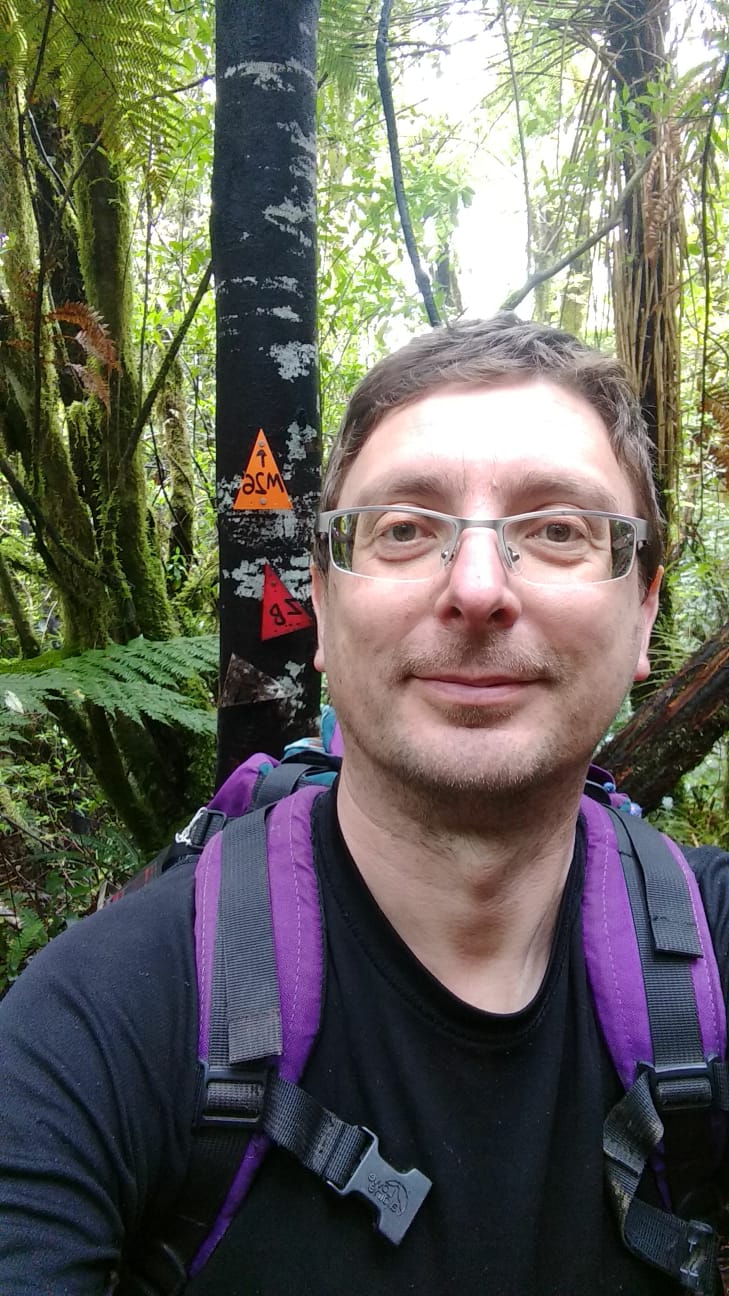
Meet the Founder
Kia ora, I’m Octavian Grigoriu, the founder and director of the Pupu Rangi Nature Sanctuary and your host, mentor, and coordinator while you’re here. I’ve lived, worked, and volunteered across five continents, experiencing different cultures and different ways of getting things done — and that journey is what eventually brought me to this rainforest in Northland.
Before Pupu Rangi, I spent close to a decade as a senior telecom architect and engineering manager with Alcatel-Lucent in New Zealand, China, and Canada, leading design teams, teaching at the Alcatel University, and earning a Lean Six Sigma Black Belt. I’ve led large teams and I've also done the hands-on, ground-level work myself so I understand the different facets on how things work. What I specialize in — and what makes a season here run smoothly — is bringing different people together and building a team that works successfully towards a common goal, in this case towards the protection of the native New Zealand forest.
I have worked in conservation since 2013. Alongside running a large-scale conservation project here at Pupu Rangi, I collaborate with New Zealand’s Department of Conservation (DOC) and carry out biodiversity ranger duties on their behalf. For interns who need a qualified, experienced supervisor to sign off their placement, this is the field experience that stands behind the training and mentoring you receive here.
When you join us — whether for a week, a month, or an internship — you’re hosted by me personally, together with the small international community of volunteers who make up each season's team. I’m happy to answer any question before you travel, whether you’re a solo traveller visiting New Zealand for the first time or wondering what a typical day looks like.
You can read more about my background on LinkedIn or get in touch any time at pupurangi.naturesanctuary@gmail.com.
Environmental Conservation and Partnerships
Nestled on the slopes of the Tutamoe peak in Northland, New Zealand, the Pupu Rangi Nature Sanctuary consists of 100 hectares of regenerating rainforest. This native forest is classified as having national significance and no logging is allowed within the sanctuary. The sanctuary is protected by a QEII covenant.
We are also located within a greater area in which kiwi are present and one of our long-term goals is to establish and maintain a protection area that will support twenty pairs of resident kiwi birds.
Pupu Rangi is home to other native species of trees and birds that require active protection from introduced pests. Cows, possums, rabbits, and feral goats browse indiscriminately on young plants thus preventing the forest renewal. Possums, stoats, ferrets, and feral cats eat eggs and bird chicks endangering the native species that are not adapted to the introduced mammalian predators. Through different techniques recommended by the Department of Conservation, we try to keep down the numbers of pests to give the seedlings and the native birds a chance to develop and mature.
The Pupu Rangi Nature Sanctuary is currently collaborating with the following organizations:
- Department of Conservation (DOC)
- Northland Regional Council
- Kiwi Coast
- Save the Kiwi
The Department of Conservation and the Pupu Rangi Nature Sanctuary have signed their second five year Management Agreement that formalizes the excellent collaboration between the two organizations. Our volunteers are performing a number of biodiversity conservation tasks contributing to the protection of the Trounson Kauri Park and Waipoua Forest. Yearly, our volunteers contribute over 1000 hours of effort to the DOC conservation efforts.

Sustainability
The sanctuary is named after one of the many fascinating creatures that calls it home: the kauri snail, or as it is named in Maori, pupurangi.
To minimize the impact on the environment, we chose not to build an ecolodge but rather borrow some tricks from pupurangi's philosophy; all structures are portable and the kitchen, showers, and the dinning hall are set-up in recycled shipping containers.
The rain water is collected from the roof, filtered and used for drinking, washing, and showering. It is then filtered again and used for watering the garden. We have a small garden which means that we can add fresh ingredients to our meals. The meat that we eat is mostly organic, from cows that graze in our neighbour's paddock. The honey that we eat is made by bees foraging in the native trees of our forest. We also compost and recycle as much as possible.
The little electricity that we use is generated by solar panels and by the occasional use of a generator. The hot water that we wash dishes with is heated by the sun. At night, we dine by candlelight and walk on paths lit by moonlight.
We do not offer all the comforts of home, but we provide days full of experiences, a clean place to sleep, hot showers, and delicious meals to be shared with friends.

Goals and Achievements
Donations and proceeds from our programs together with the effort of our participants are used for the following conservation tasks:
- fencing of the forest to prevent the entrance of grazing cattle
- marking and cutting of access tracks
- possum, rat, stoat, ferret, and feral cat control
- small mammal monitoring (rat, possum, and stoat)
- kiwi, bat, and giant kauri snail monitoring
- weed control and native tree planting
Our goals evolve from year to year, but the main goal is to ensure that the native species that live in our forest have the best chance to live their lives as they have done for millions of years.
To keep track of our achievements and daily happenings, please like/follow our Facebook or Instagram page.

Sunrise at the Pupu Rangi Nature Sanctuary

Dinner with volunteers, rangers, and friends